Transporting a mattress on top of your car can be a practical solution when moving or purchasing a new mattress. However, it requires careful consideration of several factors to ensure safety and legality. This article will guide you through the essential aspects of transporting a mattress atop your vehicle, including roof rack usage, tie-down straps, vehicle weight limits, transportation safety, and more.
Understanding Your Vehicle’s Capabilities
Vehicle Weight Limit
Before loading a mattress on your car’s roof, it’s crucial to understand your vehicle’s weight limit. This includes the maximum weight your car can safely carry on its roof, typically specified in your vehicle’s manual. Exceeding this limit can lead to car roof damage or, worse, accidents due to instability. Always check and adhere to these limits to ensure transportation safety.
Vehicle Compatibility
Not all vehicles are designed to carry large loads on their roofs. Smaller cars may not be suitable for transporting large mattresses due to their limited roof space and weight capacity. Consider the size and capability of your vehicle before deciding to carry a mattress on top.
Using Roof Racks
Roof racks are an essential accessory for transporting items on top of a vehicle. They provide a stable platform for securing loads and distributing weight evenly across the roof.
Roof Rack Installation
If your vehicle does not already have a roof rack, you may need to install one. Ensure that the roof rack is compatible with your vehicle make and model. Proper installation is crucial for avoiding car roof damage and ensuring the load is secure.
Securing the Load
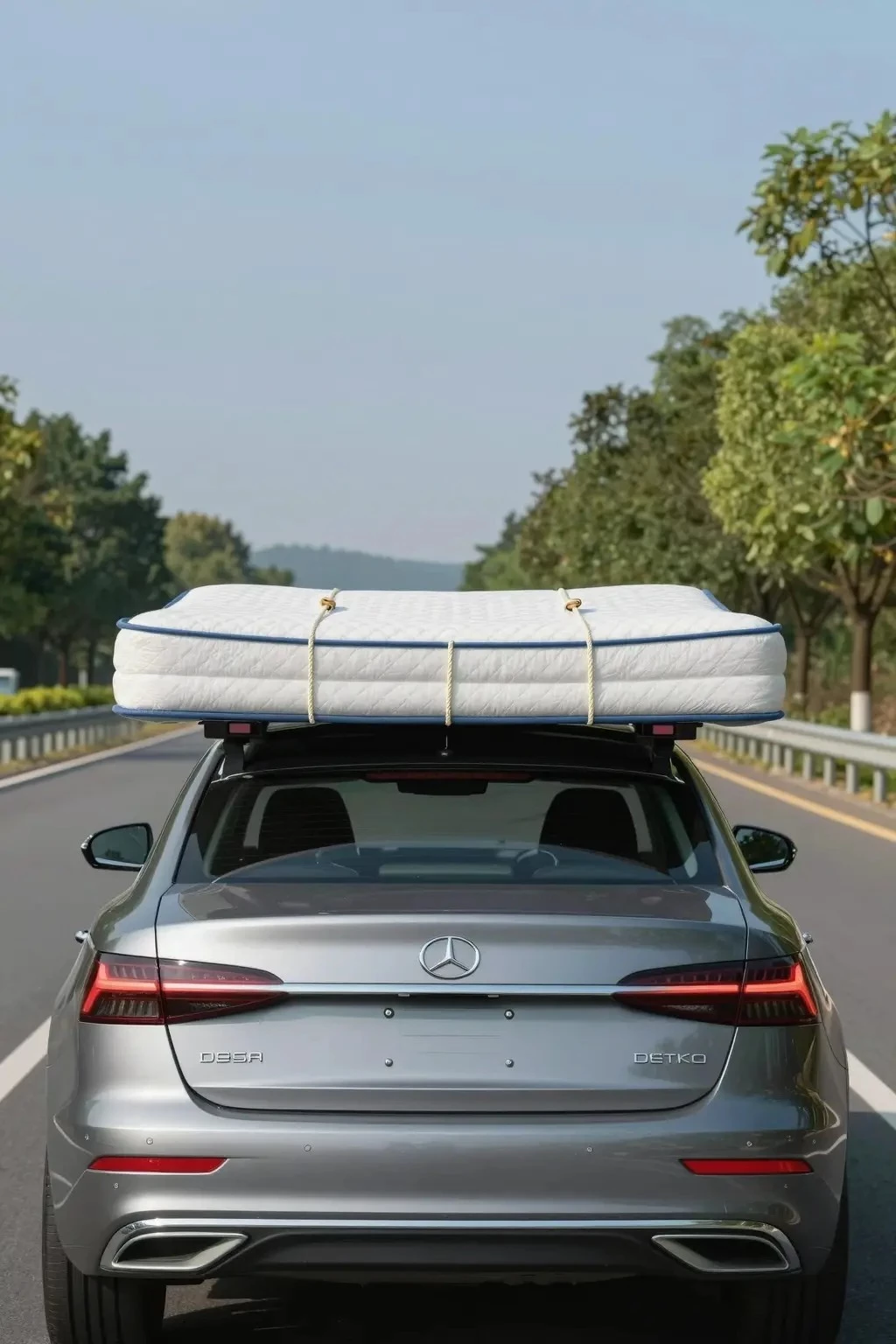
Once the roof rack is in place, the next step is to secure the mattress. Use high-quality tie-down straps to fasten the mattress firmly to the roof rack. Avoid using ropes as they can loosen over time, leading to an unsecured load.
Loading Techniques and Mattress Size
Loading Techniques
Proper loading techniques are vital for road safety. Position the mattress centrally on the roof rack to maintain balance. Ensure that the mattress does not overhang excessively from the front or back of the vehicle, as this could create wind resistance and affect driving stability.
Mattress Size
The size of the mattress is another important consideration; Larger mattresses, such as king or queen sizes, may be more challenging to transport compared to smaller sizes. Ensure that the mattress size is compatible with your vehicle’s roof space and weight limit.
Addressing Wind Resistance
Wind resistance can significantly impact transportation safety when carrying a mattress on your car roof. A poorly secured mattress increases drag, which can affect vehicle handling and fuel efficiency. To minimize wind resistance, ensure the mattress is tightly secured and lies flat against the roof.
Adhering to Driving Regulations and Highway Laws
Driving regulations and highway laws vary by region but generally require that all loads be securely fastened to prevent them from falling off during transportation. Failure to comply with these legal requirements can result in fines and penalties. Always check local laws regarding transportation of oversized loads on vehicles.
Legal Requirements
Ensure that the load does not obstruct the driver’s view, impede vehicle controls, or pose a risk to other road users. Adhering to legal requirements not only ensures your safety but also the safety of others on the road.
Protecting the Mattress
While securing the mattress is crucial, protecting it from damage during transportation is equally important. Cover the mattress with a durable tarp or plastic covering to protect it from weather elements like rain or dust.
Transporting a mattress on top of your car is feasible with the right preparation and precautions. By understanding your vehicle’s capabilities, using appropriate loading techniques, adhering to legal requirements, and taking steps to minimize wind resistance, you can safely transport a mattress without incident.
Remember, the key to successfully transporting a mattress on your car roof is to plan ahead, ensure vehicle compatibility, and always prioritize road safety. By doing so, you can avoid car roof damage and ensure a smooth, safe journey.